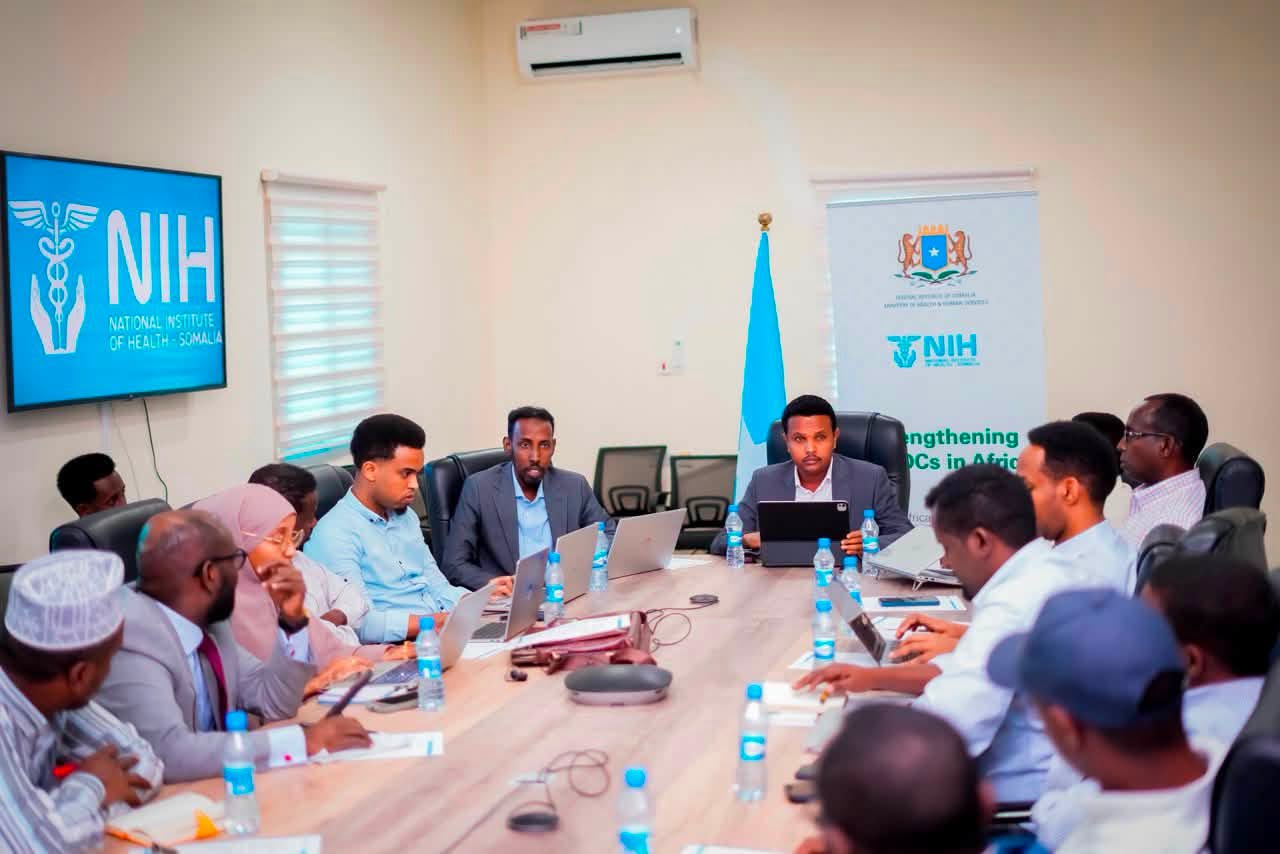
Mogadishu, 3 August 2026 – The Director General of the National Institute of Health (NIH), Dr. Hussein Abukar Muhyadin, held a high-level meeting at the National Institute of Health with representatives from leading universities in Somalia, including Somali National University, Benadir University, SIMAD University, University of Somalia (UNISO), Somali International University (SIU), Salaam University, Capital University, Mogadishu University, and Jamhuriya University.
The meeting focused on strengthening collaboration in health research, with particular emphasis on conducting studies to assess the quality of maternal and child health services in Somalia. The research is expected to generate evidence-based findings and practical recommendations that can contribute to improving health services, policies, and clinical and operational guidelines across the country.
The discussions also explored opportunities to establish practical training placements for university students studying medical laboratory sciences at the National Central Laboratory. Such opportunities will help strengthen students’ technical knowledge, practical competencies, and readiness for professional employment in the health sector.
Dr. Hussein Abukar Muhyadin, Director General of the National Institute of Health, expressed his appreciation to the participating universities for their significant contribution to the development and restoration of critical national capacities, particularly across various areas of the health sector.
The National Institute of Health, under the Ministry of Health and Social Services, remains committed to strengthening and sustaining partnerships with universities and promoting high-quality health research that responds to the health needs and priorities of the Somali people.
The Ministry recognizes collaboration between academic institutions and the national health system as an important foundation for building a stronger, evidence-based health sector and developing the next generation of skilled health professionals and researchers.